

Himalayan pink salt is popular among us nowadays. It is a common product in supermarkets. This salt attracts our attention due to its pink color. We usually think, salt comes from the sea. But the Himalayan pink is a gem hidden within the mountains. It is not just an ordinary salt. It shines bright in our kitchen, enriches our dishes. This minimally processed salt and its supplements make us wealthy in wellness with its minerals. Pink Himalayan Salt Lamp, a decorative element, can add a warm glow to living spaces. Interestingly, this natural treasure was almost discovered by horses centuries ago!
Hi! We are My Organic Body & Diet (MyOrganicBD). We are a versatile team of writers, doctors, nutritionists and healthcare professionals. We passionately work to provide you with science-backed knowledge about wellness. We aim to deliver you insightful information that can enhance your regular life.
Let’s go to the Himalayan pink salt mountain with us today. We will dig deep and uncover the history, nutrient profile, health benefits, uses and more of this natural treasure. We will collect the discoveries in our wellness pocket.
Let’s dig in!
What is Himalayan Pink Salt?

Himalayan pink salt is a mineral-rich rock salt. This crystal salt is mined from salt deposits near the Himalayan mountain range. Himalayan pink salt consists mainly of halite, the mineral form of sodium chloride, with small amounts of other naturally occurring constituents. This natural pink salt is mainly composed of sodium chloride (NaCl). It has over 80 trace minerals. Thrace minerals are the essential nutrients our bodies need in very small amounts but are important for vital functions. Even the pink color of the salt comes from trace minerals and iron oxide content. This pink crystal is typically hand-mined, unrefined and undergoes minimal processing.
What is the brief history of Himalayan Pink Salt?

The story of that natural treasure started millions of years ago. Around 500 million years ago, an ancient inland sea slowly evaporated. Expensive minerals were left behind. These deposits sealed deep under layers of rock due to tectonic movements.
A popular story links the discovery of Khewra’s salt deposits to horses in Alexander the Great’s army licking salty rocks around 326 BC. He was a legendary military commander. Before the age of 30, he created one of history’s largest empires. One day, Alexander the Great and his soldiers stopped to rest. It was Khewra, the Punjab region of Pakistan. One of the soldiers noticed, their hungry horses were licking the salty rocks! Thus, this natural salt deposit became part of human wellness history.
The Mughal emperor Akbar introduced organized mining of this pink crystal. In the 19th century, British engineers developed modern mining methods. Modern mining still follows these controlled methods.
What are the nutrients of Himalayan Pink Salt?

Let’s find out the mineral contents of this pink salt based on mineral analysis. Pink salt contains small, variable amounts of minerals and other elements, but normal culinary portions do not provide a meaningful source of essential nutrients beyond sodium and chloride. Per gram of salt contains 368-388 mg (approximately) of sodium, the essential mineral. Following are some other mineral contents of this salt from the Khewra salt mine.
As per the scientific analysis of PCSIR (Pakistan Council of Scientific and Industrial Research)—
| Major Minerals (Ranged by weight) |
| Calcium (Ca): 0.15–0.32 wt.% |
| Magnesium (Mg): 0.11–0.35 wt.% |
| Sulphates: 0.39–0.91 wt.% |
| Moisture Content: 0.03–0.09 wt.% (very low) |
| Trace Minerals (mg/kg) |
| Copper (Cu): 0.2–1.85 mg/kg |
| Manganese (Mn): 0.21–0.42 mg/kg |
| Zinc (Zn): 0.04–0.06 mg/kg |
| Arsenic (As): 0.12–0.18 mg/kg |
| Lead (Pb): 0.03–0.05 mg/kg |
Contaminant levels vary between salt sources and products. Food-grade pink salt should comply with applicable food-safety limits, and results from individual samples cannot establish the safety of every product.
Sodium is essential for fluid balance. It also helps nerve signaling and muscle contraction.
Calcium strengthens our bones and supports muscle function.
Magnesium is important for our nerve function.
Sulphates contribute to our mineral balance.
Trace Minerals contribute to the color and taste of the pink salt.
What are the proven health benefits of Himalayan Pink Salt?

Himalayan pink salt contains important minerals alongside sodium chloride. Our bodies need Very small amounts of trace minerals are important for some vital functions.
May Support Electrolyte Balance
Himalayan pink salt contributes to electrolyte balance. Minerals like sodium, chloride, magnesium, potassium regulate electrolyte balance in the body. Oregon State University research says, sodium and chloride are major minerals outside of cells. They work to control fluid balance and blood pressure. An imbalance of these elements may disrupt water balance.
May Keep Us Hydrated
Staying hydrated is essential for proper body functions. It is important for heart health, skin health, brain and muscle function. MDPI 2018 review article claimed these benefits.
Sodium and chloride help regulate fluid balance, but Himalayan pink salt offers no established hydration advantage over regular salt. Its potassium and magnesium content is too small to make it a balanced electrolyte supplement.
Digestive Function
Himalayan pink salt adds flavor to food, but there is insufficient clinical evidence that it improves digestion, prevents gas, increases bowel movement, or boosts metabolism. The review article of Dr Rajeev Singh provided the information on 2025.
May Soothe Our Skin
Pink Himalayan salt is good for skin conditions. Many people use the pink salt crystals in their bath soaks. It helps soothe and improve skin health. Its minerals like magnesium, potassium, calcium play a vital role in skin health. Some people with eczema find salt baths soothing, but this does not establish a specific benefit from Himalayan pink salt. Ask your dermatologist whether a salt bath is suitable for your skin.
Less Processed
Himalayan pink salt is less processed than refined salt. As it is mined from the salt mine, it undergoes minimal processing. Many Himalayan pink salt products contain only salt, although ingredients vary by brand. Minimal processing does not make pink salt nutritionally superior to regular table salt.
Salt Alternatives
Pink Himalayan salt can be a smart alternative in our cooking. The pink crystals are larger than regular table salt. It is mild and natural in flavor. Reducing the total amount of salt you use can lower sodium intake. Switching to Himalayan pink salt alone does not reliably reduce sodium, especially when equal weights are compared.
Special Note
Pink Himalayan is mineral-rich salt. But you should not use it to enrich mineral content in the body. Treat this pink crystal the same way you treat regular salt. Excess intake can be harmful. The American Heart Association recommends no more than 2,300 milligrams of sodium daily, with an optimal goal of no more than 1,500 milligrams for most adults. This includes sodium from all foods, drinks, and supplements.
Adding Himalayan pink salt to water increases sodium intake but has no established special benefit for skin health. It is not equivalent to a properly formulated oral rehydration solution. Use a mindful amount when you are cooking. Avoid access, maintain moderation. Gain the real benefits of this natural treasure.
What are the possible disadvantage of Himalayan Pink Salt?
If you use the salt in moderation, it is mostly safe for you. But too much consumption may increase some risks.
Like other types of salt, pink salt contains sodium. Excess intake of sodium can raise blood pressure. It may increase the risk of heart disease or stroke. Salt can store excess water in the body. This may affect your kidneys. People with the history of kidney disease or cardiovascular issues, should limit their sodium intake.
Talk with your doctor and nutritionist. Follow the recommended amounts. With proper moderation, you can avoid most risks.
How to use Himalayan Pink Salt?
Himalayan pink salt can be a natural and healthy alternative to regular table salt. This pink crystal is a good fit for cooking, seasoning or wellness routines.
You can use it in drinks, soups, salads or curries. A finishing touch with the sprinkle of this pink salt can make a top-notch meal.
Pink Himalayan salt is also a good asset for external use. A pink salt scrub can take care of your skin!
Take a look at some easy ways of using.
Pink salt lemon water
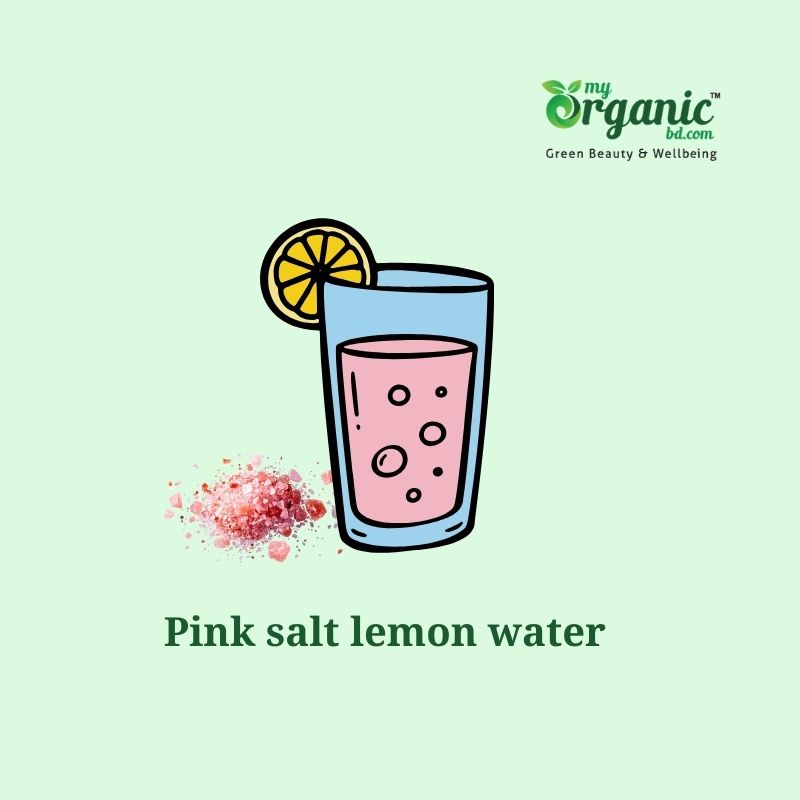

Ingredients
- Lukewarm water, 1 glass
- Fresh lemon juice, 1 tablespoon
- A pinch of Himalayan pink salt
Instructions
Add lemon juice and pink salt to water. Mix them well. Drink the soothing mixture. Keep yourself hydrated with balanced electrolytes.
Sautéed Vegetables
Ingredients
- Vegetables
- Olive oil
- Himalayan pink salt, to taste
- Herbs
- Black pepper
Instructions
Take broccoli, carrot, capsicum, beans and other green veggies of your choice. Heat olive oil in a pan. Add the vegetables. Toss them, sauté for a few minutes until they turn tender. Sprinkle a pinch of pink salt and black pepper. Add fresh herbs like parsley, mint or basil at the end. Enjoy the natural flavors and aroma of your delicious sautéed vegetables.
Soothing Salt Bath

Ingredients
- Lukewarm water
- Himalayan pink salt
- Essential oil (optional)
Instructions
Fill your bathtub with lukewarm water. Add a cup of pink Himalayan salt. Stir well until it dissolves. For sensitive or eczema-prone skin, leave out essential oils and fragrances, which can cause irritation or allergic reactions. Soak your body for 15-20 minutes. Rinse with clean water. Relax yourself with a soothing bath.
What are main Himalayan Pink Salt supplements and what they do?
Himalayan pink salt is also available in supplement forms. Commonly used supplements include powder forms, capsules, products for mineral bath soak.
These supplements contain trace minerals and benefit us in good ways.
- Pink Himalayan salt powders help balance electrolytes. It may keep the body hydrated. Powders commonly contain up to 1000 milligrams of sodium. People with low electrolyte balance can use this powder as a supplement.
- Capsules of Himalayan pink salt are convenient for people with low sodium chloride in the body. These people can use these capsule supplements alongside their diet. Moderation is a must for the best results.
- Mineral bath soak products are for external use. These products promote muscle relaxation and comfort the skin.
Before using pink salt supplements, consult with your doctor. Moderate doses of supplements are a must for wellness. More research is needed on Himalayan salt supplements to benefit the consumers.
What is the future of Himalayan Pink Salt as a supplement in wellness industry?
Himalayan pink salt supplements have a promising future. This natural pink gem has been offering us different benefits for long ago.
Nowadays, people prefer minimally processed alternatives. They support products containing robust health values. The pink salt supplements represent the modern forms of the natural salt. Wellness industries are incorporating natural products with modern health science. The supplements include lifestyle and skincare products. Consumers are increasingly prioritizing these products and relying on them. According to market research, North America will remain the largest market for pink Himalayan salt through 2030. The rising consumption, abundant supply and market value are increasing in the Asia-Pacific region as well.
FAQ
Is Himalayan pink salt healthier than table salt?
Himalayan pink salt has no established meaningful health advantage over regular table salt. Both supply sodium, while iodized table salt also provides added iodine. Choose salt for taste and texture, and keep total sodium intake within recommended limits.
Why is the Himalayan salt pink?
Himalayan salt contains minerals like sodium, magnesium, potassium and other trace minerals. These minerals are responsible for the pink hue of the salt.
Does Himalayan pink salt contain iodine?
Himalayan pink salt is usually not iodized and is not a reliable source of iodine. Check the label for added iodine and obtain enough iodine from suitable foods or supplements when needed.
Can I use Himalayan pink salt daily?
Yes. You can use the pink salt daily. It must be in small amounts as part of a balanced diet.
Is sole water good?
“Sole” generally refers to a concentrated solution made by dissolving salt in water; small amounts are sometimes diluted into drinking water. It has no established health advantage over ordinary water and adds sodium to the diet. There are less human research evidences about sole water benefits. You must use it cautiously as excess sodium intake may become harmful.
Is pink Himalayan salt safe for high blood pressure?
Himalayan pink salt contains sodium which may increase blood pressure. Consult with your doctor for accurate moderation and to avoid risks.
The Final Gem
Today, we discovered the treasure hidden beneath the mountains. This pink gem and its mineral profile support our everyday wellness. Let’s use this natural treasure wisely. Keep Himalayan salt as a part of our wellness routine.


