

Black seed is one of the most well-known herbs around the world. Every seed of this herb tells a story.
Since childhood, black seed has always fascinated me. It fits in different recipes across cultures. This thing grabbed my attention. Whenever I caught a cold, my mom and grandma would give me mashed black seeds or mix them with honey. Everyone recommended black seed oil for hair care. I noticed, in religious traditions it is called the “Seed of Blessings”!
When I began studying Nutrition, I learned about nutraceuticals and functional foods. That was the moment I finally understood why it earned that name.
Hello! We are My Organic Body & Diet (MyOrganicBD). A team of writers, doctors, nutritionists and health professionals. We aim to provide you with insightful information that can enhance your regular life. As a member of this amazing team, today I will share my findings and experiences about black seed with you.
Let’s collect the blessings together!
What is Black Seed?
Black seed is a powerful and widely used medicinal herb. Black seed refers to the small seeds of Nigella sativa, an annual flowering plant in the Ranunculaceae, or buttercup, family.They come from the Nigella genus of the Ranunculaceae family. Black caraway or black cumin are also its common names. In the Indian subcontinent, black seed is known as Kalonji or Kalojira. For cooking or medicinal uses, the small seeds serve us efficiently. While eating the seeds, we generally experience a blend of slightly bitter, peppery, pungent, and earthy tastes. The bioactive compounds of black seed offer various healthcare properties. These features make the herb both a traditional home remedy and a flavoring spice.
What is the brief history of Black Seed?
The story of black seed began over 3,000 years ago. Nigella sativa is native to parts of eastern Europe and western Asia and is now cultivated in many other regions. Gradually spread its blessings across the Middle East, South Asia, Europe and parts of Africa. Its strong flavor and wide medicinal qualities attracted ancient people. This small herb earned a respected place in religious practices.
In Islam, it is a Prophetic Medicine. Its Arabic name is Habbatul Barakah, which means “Seed of Blessing”. Prophet Muhammad (PBUH) described it as “A drug that cures all illnesses except death.”
In the Bible, this seed is mentioned in the Old Testament. Referred to as “curative black cumin”.
This powerful seed was also a part of ancient Egyptian traditions. Black seed oil was even found in the tomb of King Tutankhamun.
The Nigella sativa plant has pretty flowers. Black seed requires full sun, well-drained sandy loam soil, and moderate temperatures of 20-25°C. Historically, it is sun-dried and cold-pressed for oil. These ancestral methods are still alive, blended with modern cultivation techniques.
What are the nutrients of Black Seed?
Black seed is rich in nutrients and bioactive compounds (natural compounds found in plants). I spent considerable time to review PubMed research up to 2025. Based on the findings, I tried to organize the components with their roles into a single framework.
Let’s take a closer look.
Nutrient Profile of Black Seed
| Nutrient | Category | Amount | Function |
| Proteins | Macronutrient | ~20–25% of seed weight | Supports cellular development |
| Carbohydrates | Macronutrient | — | Contributes to energy metabolism |
| Dietary Fiber | Macronutrient | ~30–40% of carbohydrate fraction | Acts as prebiotic; supports bowel movement and glycemic regulation |
| Total Lipids | Macronutrient | ~30–40% of seed weight | Primary energy reserve; carrier of bioactive fatty acids |
| Oleic acid (Omega-9) | Fatty acid (MUFA) | Major fraction of fixed oil | Good for heart health |
| Linoleic acid (Omega-6) | Fatty acid (PUFA) | Major fraction of fixed oil | Supports cell structures and inflammatory balance |
| Palmitic acid | Fatty acid (SFA) | Minor–moderate proportion | Contributes to shelf life of the oil |
| Calcium | Mineral | — | Supports strong bone and teeth structure |
| Magnesium | Mineral | — | Essential for muscular function |
| Iron | Mineral | — | Transports oxygen |
| Zinc | Mineral | — | Supports immune system |
| Potassium | Mineral | — | Maintains electrolyte balance |
| Thiamine (Vitamin B1) | Micronutrient | — | Helps produce energy |
| Riboflavin (Vitamin B2) | Micronutrient | — | Supports cellular metabolism |
| Niacin (Vitamin B3) | Micronutrient | — | Helps maintain metabolism |
| Vitamin E (Tocopherols) | Micronutrient | — | Good for skin and protects from cell damage |
Bioactive Compounds of Black Seed
| Bioactive Compound | Amount | Function |
| Thymoquinone (TQ) | ~30–48% of essential oil fraction | Antioxidant and anti-inflammatory activity |
| Thymohydroquinone | Present in volatile oil | Antimicrobial mechanisms |
| Thymol | Present in volatile oil | Preservative actions |
| Alkaloids | Trace | Anti-inflammatory effects |
| Saponins | — | Supports immune responses and reduce cholesterol absorption |
| Phenolic acids | — | Enhance antioxidant capacity |
| Fixed oils (fatty acid complex) | Dominant non-volatile fraction | Protect cells from oxidative damage |
| Volatile oils | Minor fraction | Responsible for aroma and antimicrobial activity against bacteria and fungi |
What are the proven health benefits of Black Seed?

Black seed has enormous benefits. Some significant health benefits are—
Diabetes Management
Some clinical studies suggest that black seed preparations may improve blood glucose control when added to usual treatment for type 2 diabetes. Benefits for type 1 diabetes have not been established, and black seed should not replace insulin or other prescribed medication.
Black seed could be a helpful addition to standard diabetes treatment. A systematic literature review of MDPI stated this in 2019.
Respiratory Health Support
Black seed can support respiratory health. Various preparations derived from Nigella sativa have a potential role for clinical use in asthma. A 2017 study of PubMed showed this information. A small randomized trial found improved asthma-control scores with black seed oil supplementation. Further research is needed, and black seed should not replace prescribed inhalers or be used to treat an asthma attack. Traditionally, people use this seed in different ways to get rid of a common cold and cough.
Protect Liver
Black seed can protect the liver tissues. Animal studies have investigated whether black seed extracts and thymoquinone can reduce chemically induced liver injury. These findings do not establish protection against radiation or chemical exposure in humans.
Protect Heart
Black seed can help protect our hearts. It is rich in antioxidants like thymoquinone. This component helps reduce inflammation and cardiovascular risk factors. The elements of this small seed reduce bad cholesterol (LDL). Some clinical trials have reported lower blood pressure with black seed preparations, while others have not shown a clear benefit. The findings do not establish a standard dose, and black seed should not replace prescribed blood-pressure treatment.
Support Digestive System
Black seed is a good source to support our digestive system. It is a common traditional home remedy to relieve indigestion, gas, or bloating. A 2012 mouse study found that thymoquinone reduced experimentally induced colitis. This preliminary finding does not establish black seed or thymoquinone as a treatment for inflammatory bowel disease in humans.
Anti-inflammatory and Antioxidant Effects
Our above nutritional profile shows the high amounts of antioxidant components of black seed. These components show anti-inflammatory properties. Some significant advantages of these properties are—
- Black seed reduces inflammation and relaxes muscles.
- Small studies have explored black seed oil as an additional treatment for rheumatoid arthritis symptoms, but the evidence remains limited. These findings do not establish benefits for osteoporosis.
- Topical use of black seed oil or using the supplements can help reduce joint pain, stiffness, and swelling.
- Relieve muscle pain and headache.
- Protect cells from damage.
- Laboratory and animal studies have explored the anticancer activity of thymoquinone. These findings do not establish that black seed prevents or treats cancer in humans.
Antibacterial and Antifungal Effects
Black seed has been studied for effects on certain immune markers, but it has not been established as a reliable way to prevent viral infections or provide broad protection against pathogens. According to the National Center for Biotechnology Information (NCBI) studies, Thymoquinone helps regulate immune response.
Weight Management
In traditional practices, black seed is quite famous for weight management. Some short-term trials have reported improvements in weight-related measures with black seed supplementation, including alongside a calorie-restricted diet. These findings do not establish that black seed boosts metabolism or maintains a healthy BMI on its own.
Improve Skin and Hair Health
A small 2013 pilot study in 20 people with telogen effluvium reported improvements in hair density and thickness with a scalp lotion containing 0.5% Nigella sativa. Larger studies are needed, and these results do not establish that eating black seed or taking its oil treats hair loss.
Black seed oil contains bioactive elements. They facilitate wound healing. They fight acne, eczema and wrinkles. The seed oil stimulates tissue and improves skin texture.
What are the possible disadvantages of Black Seed?

Black seed is safe for most people. But excess use can be harmful. There may be some rare effects.
- Large quantities may cause digestive discomfort.
- During childbirth, uterine contractions help the baby come out. The safety of black seed supplements during pregnancy has not been adequately established. Pregnant people should consult their maternity care provider before using black seed oil, extracts, or medicinal doses.
- Large amounts may drop blood sugar levels or cause low blood pressure.
- It may cause blood coagulation problems.
- Some people rarely face allergic reactions.
Consult with your doctor if you have any prior health issues. Follow suggestions of your nutritionist for accurate daily amounts.
How to use Black Seed?
There are many different ways to use black seeds. It is common in different cuisines around the world. You can add black seeds to curries. You can make a twist in your vegetable dishes or use them as garnish. You can bake your breads or biscuits with a sprinkle of black seeds.
Want to make some easy recipes today?
Let me start with a simple recipe my mom and grandma still prepare.
Black Seed Toasted Mash
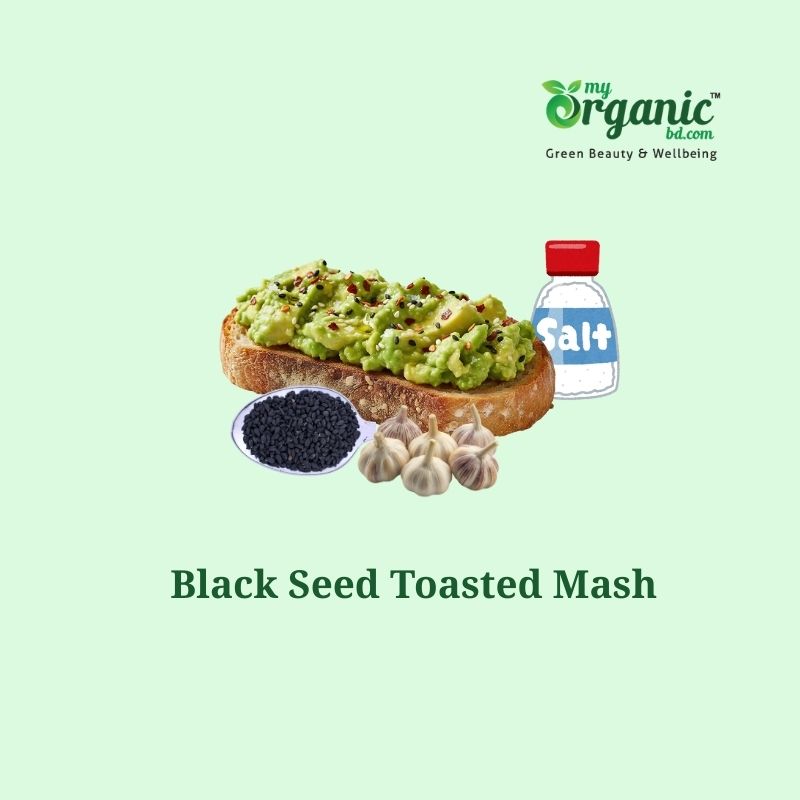

Ingredients
- Black seed, 3-4 teaspoons
- Garlic, 2 cloves
- 1-2 green chili
- Salt, to taste
- 2 teaspoons mustard oil
Instructions
In a dry pan, lightly toast the black seeds on low heat. Let the aroma come out. Once cooled, crush them with spice grinder. Also crush garlic cloves, green chili and salt. Add mustard oil and mix all ingredients well. Enjoy the toasted mash served with plain rice. The pungent and slightly bitter taste can add a distinct flavor.
Simple Morning Tonic

Ingredients
- ½ teaspoon black seed oil
- 1 teaspoon raw honey
- 1 cup lukewarm water
Instructions
Add black seed oil and honey to the lukewarm water. Stir and mix them well. Enjoy your morning tonic.
Immunity Boosting Tea

Ingredients
- 1 teaspoon black seeds
- Fresh ginger
- Little bit of cinnamon
- Purified water
Instructions
Boil black seeds, ginger and cinnamon in water for 10- 15 minutes. Strain and pour tea into a cup. You can also add honey to taste. Enjoy your tea.
What are the main Black Seed supplements and what do they do?

Black seed is a traditional medicinal plant being studied for several potential health effects. Supplements differ in composition and concentration, and their benefits depend on the preparation, dose, and condition being studied.
Black seed supplements are mostly available as—
- Oils
- Powders
- Capsules
- Soft gels
- Extracts
Black seed oils are most famous. Both for topical use or intake, people have used the oils for years. The oils help with inflammation, digestion, skin, and hair care.
For daily wellness, black seed powder is added to foods.
Capsules, extracts or soft gels of this wonder herb can boost immunity and metabolic health.
What is the future of Black Seed as a supplement inthe wellness industry?
Black seed supplements have robust potential in the wellness industry.
This wonder seed is both a functional food (consumed as part of regular food form) and a nutraceutical (taken in medicinal forms). It has historical and religious significance. The nutritive profile provides therapeutic and disease-preventing benefits.
People are now conscious about natural foods. For future wellness, the global demand for plant-based remedies is increasing day by day. Black seed has been serving us traditionally. It meets science-backed wellness practices. Researchers are looking for more blessings of this small seed. The wellness Industry is innovating more uses of supplements. Also, global market profits are noticeable.
All these factors suggest strong future growth of black seed supplements.
FAQ
Does black seed boost immunity?
Yes. Black seed has immunity-boosting potential. It is rich in antioxidants, particularly Thymoquinone. It reduces inflammation and supports immune activity.
Can I take black seed daily?
There is no universally established daily supplement dose for black seed. Suitable amounts depend on the preparation, its concentration, your health, and any medicines you take. Consult with your doctor if you have any health issues.
Can black seed help relieve a common cold?
Black seed is traditionally used for coughs and colds, but reliable clinical evidence that it relieves the common cold is limited. Findings from asthma studies do not establish benefits for cold-related congestion or cough.
Can black seed increase breast milk?
Black seed has traditionally been used to support milk supply, but reliable evidence that it increases breast milk production is limited. Its safety for breastfed infants is also insufficiently studied, so discuss supplement use with a healthcare provider or lactation specialist.
Can black seed improve digestion?
Yes. Black seed can improve digestion. The active components of this seed help reduce gastrointestinal issues.
Gathering The Blessings
I’m pretty sure many of you have unforgettable memories and experiences with black seed. Today, we enhanced our knowledge about it. Let’s gather all these blessings. Let black seeds care for our wellness.


