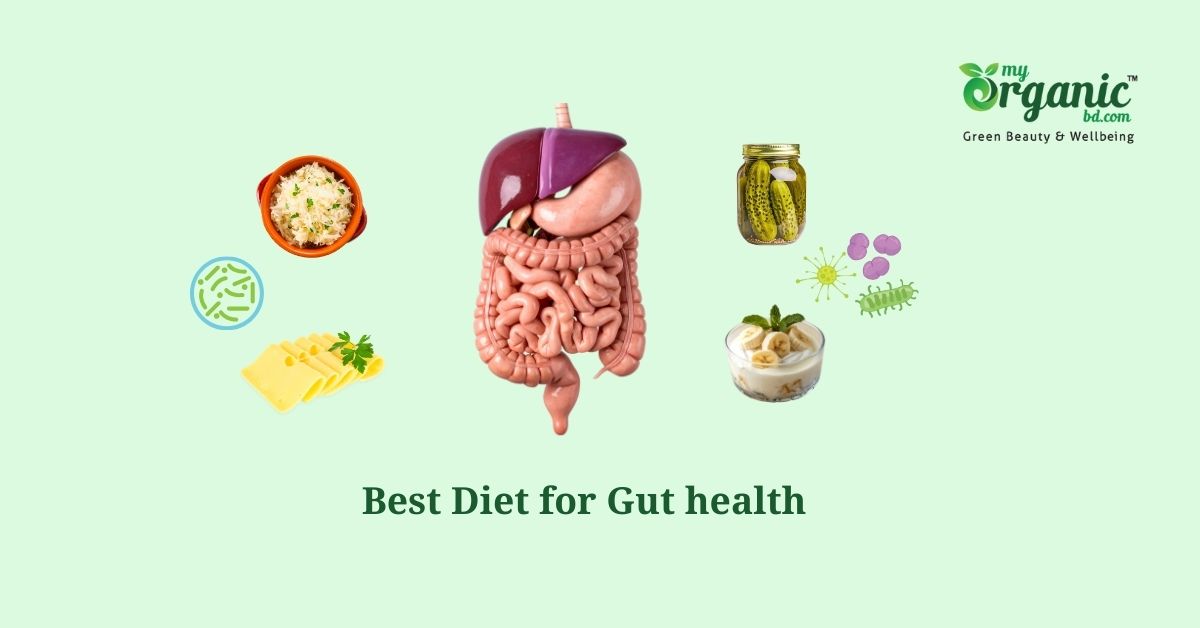
We must follow the best diet for gut health. Our gut is one of the organs that is related to every metabolic process of our body. It is not just a food-digesting machine.
The health of the gut determines the health of all other organs of your body. Every cell of your entire body depends on it. So the better you maintain your gut, the better your overall health will be. Its role goes way beyond absorption.
There are neural cells in our gut that are directly linked to the brain. Better digestive health can improve your mood and keep you happy. The gut is often referred to as the second brain. We have to take healthy foods and supplements to improve our gut.
We are team My Organic BD. We are a group of wellness professionals sharing evidence backed insights on organic wellness.
In this article, we share the best diet for gut health. The foods that should and should not be included in your meal. We also give an insight on gut supplements.
What is gut health?
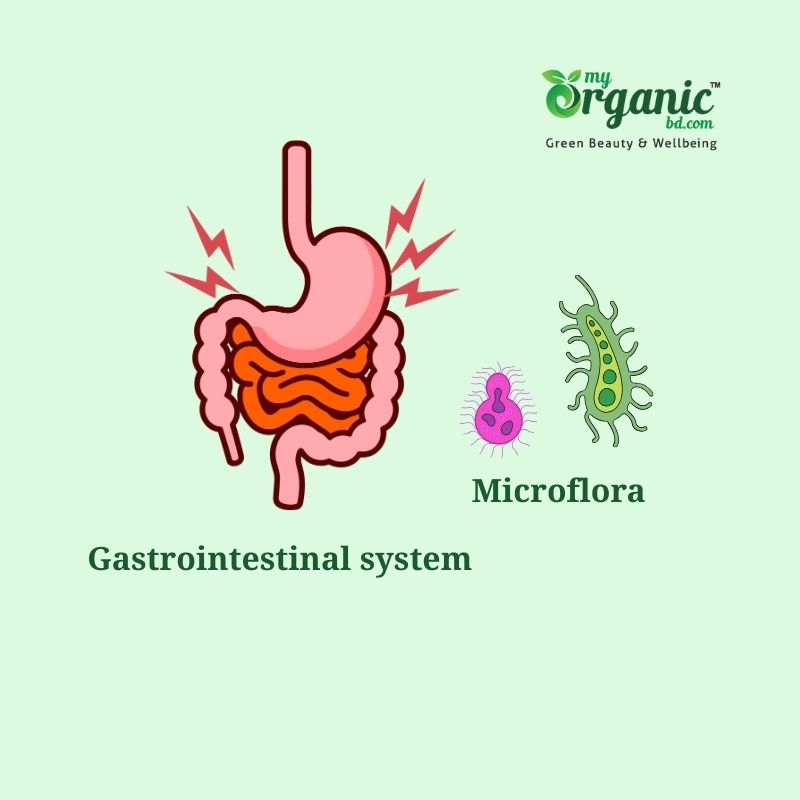
Gut health refers to the overall well-being of the human gastrointestinal system. It consists of the intestine. There are various components of the gut that determine the health of its system. First, the gut microflora. They are the group of bacteria, fungi, and viruses that are important members of our gut space. Most of those bacteria are not harmful in a healthy condition. They play a crucial role in the breakdown of complex food and advanced absorption.
The more diverse and healthy your gut microflora is, the better it is for your gut health. The health of those microorganisms depends on your food habits and lifestyle.
The main focus of your gut wellness is keeping your gut flora healthy. The health of the gut lining and movement are also important parts of gut wellness.
We will discuss the basics you need to know to maintain your gut.

How do prebiotic and probiotic foods improve gut health?
Now, let’s discuss the widely popular terms probiotic and prebiotic. Probiotic food is the food that directly supplies beneficial bacteria in your gut. It can be fermented food, yogurt, cheese, etc. A lot of the bacteria die in our stomach acid, but a good amount of them can make it through the gut. They stay in the gut and support better digestion.
Prebiotic foods are foods that feed or improve the health of gut microorganisms. Insoluble fibers and other food components are known as prebiotic foods.
Probiotic food contains bacteria, and prebiotic foods contain the food for those microbes. For a healthy gut, you should take both probiotic and prebiotic food.
So how do probiotic and prebiotic foods improve our gut health? Those improve the diversity and community of the bacterial colony in our gut. Those communities break down diverse nutrients and supply them to the body.
When your gut is full of healthy microflora, the neural cells signal your brain, Digestion is going well, and the gut environment is alright. After getting this signal, our brain releases happy hormones.
Gut microbes can influence levels of serotonin, dopamine, and GABA. Those neurochemicals improve our mood and well-being ( Gut-brain axis). This was a simple explanation of what happens in our gut and how it affects us.

What are the best foods for gut health?
There are different categories of food that help gut health differently. Some add healthy bacteria to your gut. Some nourish the health and diversity of the gut microbiota community.
And others may soothe your gut linings. Some food may also lower your risk of gut diseases like colon cancer.
Let’s discuss all the foods briefly.
- Fermented Food ( Probiotics)
Fermentation is a process in which a food is processed with the biological activity of microorganisms. Microorganisms break down organic matter such as sugar, starch, and protein for their metabolic process.
In many foods, fermentation not only preserves the food but also enhances its nutritional quality and flavor. So fermented foods contain a huge number of live bacteria, which adds to your gut flora community.
They come with a range of good benefits for health. They offer better microbial diversity, improved digestion, soothing inflammation, and more. Here are some of the fermented foods that should be in your gut health diet plan:
Milk Based
- Yogurt: A milk-based fermented food with lactic acid bacteria.
- Kefir: A drinkable fermented milk with yeast and probiotics.
- Cheese: An Aged dairy product with different types of bacteria.
- Sour cream: Tangy, thick dairy product with lactic acid bacteria.
- Buttermilk: fermented churning butter with a tangy taste.
- Skyr: A popular fermented dairy from Iceland.
- Greek Yogurt: Thicker yogurt with more protein and probiotics.
Vegetables:
- Sauerkraut: Fermented cabbage with lactic acid bacteria.
- Kimchi: Spicy Korean fermented vegetable with napa cabbage and radish.
- Pickles: Fermented cucumbers in brine.
- Curtido: Fermented cabbage reddish with carrots and sometimes onion.
- Gochujang: Fermented chili, soybean, and glutinous rice.
- Fermented Vegetables: Garlic, carrots, beets, and other vegetables are often fermented in brine.
Check out the Super Vegetables: List, Health Benefits, Types, Wellness, & More.
Soya-based:
- Miso: Popular Japanese fermented product with soybean and koji fungus.
- Tempeh: Nutty-tasting cake made with fermented soybeans.
- Natto: Strong-smelling sticky soya product.
- Soy Sauce: A common soy-based fermented sauce used all over the world.
- Tamari: Another soy-based fermented sauce.
Others:
- Sourdough bread: A bread made with fermented wild yeast and lactic acid bacteria.
- UdkuL Steamed south indian cakes made from fermented rice.
- Boja: Thick, sour fermented food made with millet or sometimes wheat.
- Kvass: Made with rye bread, mildly alcoholic.
- Apple cider vinegar: A vinegar made with apple fermentation.
- Coconut vinegar: Fermented vinegar made with coconut.
- Rice vinegar: Fermented vinegar made with rice.
- Fermented honey: Honey is fermented with alcoholic mead.
- Salami: A fermented meat sausage with good bacteria.
- Pepperoni: A fermented meat sausage commonly used in fast food.
Note: There are thousands of fermented foods across cultures; here, we included the foods that are better known globally.
Prebiotic Rich Food
Prebiotic-rich foods improve the growth and environment for microorganisms in the gut. It can be fibers to other components that improve microorganism growth and wellness.
In short, those foods feed the bacteria that are already in your gut. Here are the prebiotic foods and the components that help the bacteria grow.
- Jerusalem artichoke (sunchoke): Inulin
- Garlic: Fructooligosaccharides
- Onion: Fructooligosaccharides
- Leek: Inulin & Fructooligosaccharides
- Asparagus: Inulin
- Banana (unripe/green): Resistant starch
- Oats: Beta‑glucan & Resistant starch
- Barley: Beta‑glucan
- Whole wheat: Arabinoxylan oligosaccharides
- Apples: Pectin
- Flaxseeds: Mucilage (soluble fiber)
- Chickpeas: Galactooligosaccharides
- Lentils: Galactooligosaccharides
- Green peas: Galactooligosaccharides
- Cashews: Galactooligosaccharides
- Chestnut: Resistant starch
- Mushrooms: Beta‑glucan
- Seaweed (e.g., wakame): Alginate & Fucoidan
- Honey: Oligosaccharides
Food With Polyphenol
Polyphenols are powerful antioxidants that do a great job of protecting the gut lining from oxidative stress. They also feed the gut bacteria, ensuring their healthy population.
Here is the list of polyphenol-rich foods:
Fruits:
Raspberry, strawberry, blueberry, kiwi, blackberry, apple, cherry, pomegranate, plum, pear, orange, lemon, grape, lime, grapefruit,
Vegetables:
Red onion, carrot, spinach, shallot, broccoli, red cabbage, kale, artichoke, asparagus, celery
Legumes & Pulses:
Red kidney bean, black bean, lentil, soybean
Nuts & Seeds:
Walnut, pecan, chia seed, almond, hazelnut, flaxseed,
Whole Grains:
Whole wheat, buckwheat, oat, rye, barley
Herbs & Spices:
Oregano, thyme, rosemary, basil, clove, star anise, turmeric, cinnamon, parsley, peppermint
Beverages:
Coffee, red wine, cocoa, green tea, black tea, herbal tea
Oils & Fats:
Extra virgin olive oil, flaxseed oil
Others:
Black olive, caper, dark chocolate, soy sauce
Healthy Fats
Healthy fats come with anti-inflammatory effects that improve the wellness of the gut. They support the absorption of fat-soluble vitamins essential for proper heart health.
Good fats also nourish the function of the gut barrier. Here are some of the gut-healthy good fats:
- Olive oil
- Avocado
- Avocado oil
- Almonds
- Macadamia nuts
- Hazelnuts
- Peanuts
- Flaxseeds
- Chia seeds
- Walnuts
- Hemp seeds
- Fish oil
- Algal oil
Please read Healthy Fats: Organic Source, Benefits, and Nutrition Guide to know more.
Which foods improve gut health naturally?
Foods that have probiotic and prebiotic effects will improve your gut health naturally. You can get supplements for improving gut health, but food is enough to maintain your gut health.
A diverse diet will also improve the diversity of your gut health. But if you have a tight schedule and/or do not have enough probiotic-rich food, a supplement can be a good option.
Try to eat some probiotic and prebiotic-rich foods with berries and good fat. That’s enough to keep your gut happy. If you are reading this, you should already know that a healthy gut equals a healthy mind.
Are fermented foods good for gut health?
Yes, fermented foods are an excellent source of live bacteria and microbes. Those beneficial bacteria improve your gut health. Eating some probiotic or fermented food every day is ideal. But eating at least 3 times a week should keep your gut in check.
What fruits and vegetables are best for gut microbiome diversity?
Gut microbial diversity depends a lot on a diverse diet. Eat a variety of fruits, vegetables, and fermented foods for healthy bacteria. Then eat prebiotic food with fiber and gut-healthy components to maintain them.
Eat fruits like berries, pears, bananas, apples, and citrus fruits for better gut microbe diversity. Broccoli, leafy greens, onions, and fermented veggies can improve the diversity of microorganisms in your gut.
Avoid highly processed, sugary, and fried foods to ruin your gut health.
How long does it take to heal the gut through diet?
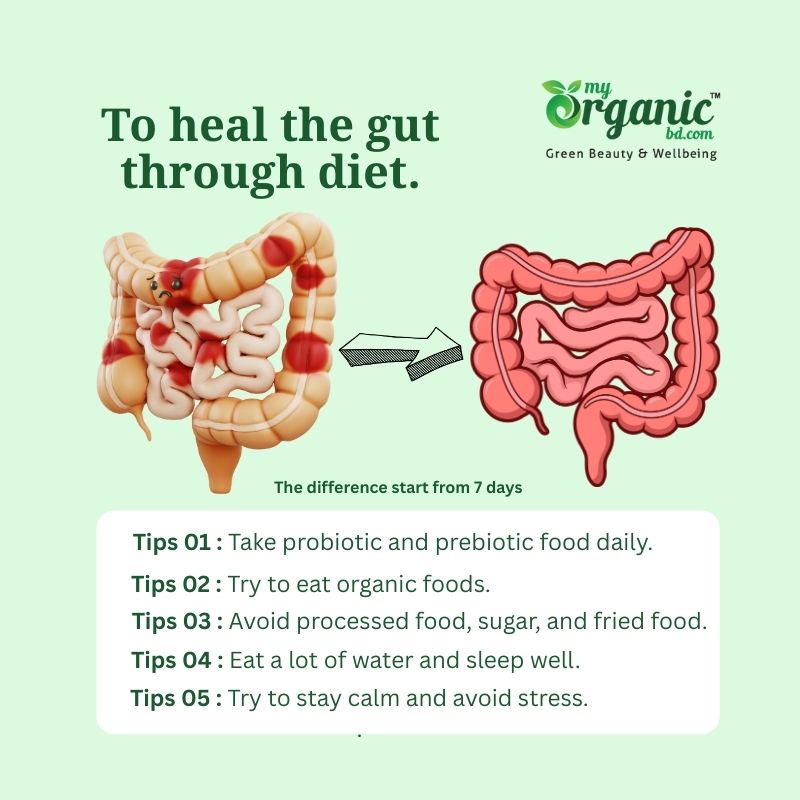
It depends on the condition of your gut. But in general, it takes a month to completely get a super healthy gut. In 7-14 days, one can feel the difference. But if you have other issues such as a poor gut due to poor dirt or lifestyle, It may take up to 3 months to heal properly.
People with more serious problems such as IBS, IBD, SIBD, or post-antibiotic need 3-6 months of diet, supplements, and medical guidance to heal.
Here are some of the steps to healing your gut:
- Take probiotic and prebiotic food daily.
- Try to eat organic natural superfoods.
- Avoid processed food, sugar, and fried food.
- Eat a lot of water and sleep well.
- Try to stay calm and avoid stress.
Can hydration improve digestion and support a healthy gut?
Yes, hydration is one of the most essential factors to improve your gut health. Without proper hydration, your gut’s chemical environment becomes unstable. It is not good for both you and the bacteria.
Water is also essential for the proper breakdown of food. It also benefits proper brow movement. Without proper hydration, your gut lining is also at risk of damage and stress. Lastly, to make the fiber work, water is essential.
Maintain a steady water intake throughout the day for a balanced gut. Drink water in the morning and before milk to stabilize the stomach acids.
Does intermittent fasting help improve gut health?
Yes, intermittent fasting can be great for your gut if done properly. With this fasting, you should include a gut-healthy diet to get the maximum result. Fasting gives your gut a break. This allows the system to restart and repair. Fasting also improves the mobility and inflammation of your gut. The intestinal barrier function also gets a boost from fasting.
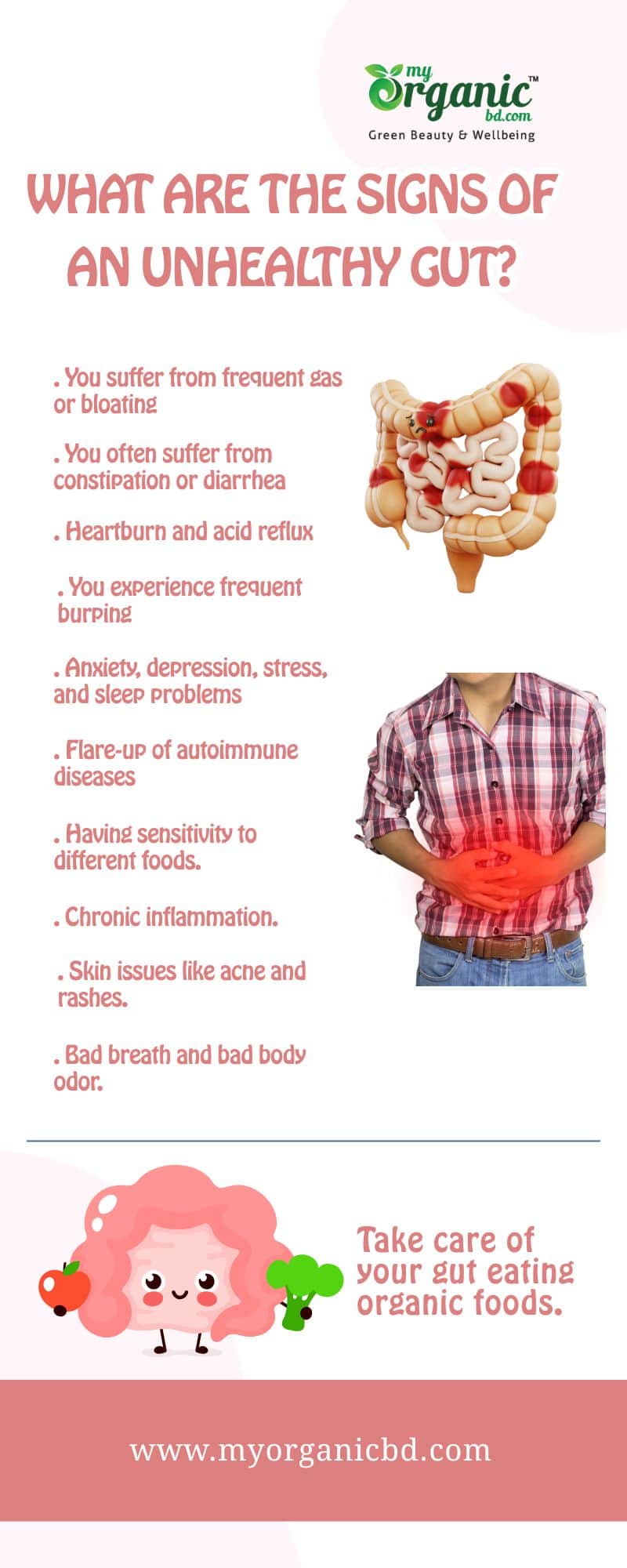
What are the signs of an unhealthy gut?
An unhealthy gut is often hard to recognize, as it impacts almost all areas of your health. If you feel a lack of energy and overall mental and physical burden, your gut might be the reason.
You can never be wrong by trusting your gut. Any effort towards your gut will help you in the long term. However, there are also some signs of an unhealthy gut.
Check them out below:
- You suffer from frequent gas or bloating
- You often suffer from constipation or diarrhea
- Heartburn and acid reflux
- You experience frequent burping
- Anxiety, depression, stress, and sleep problems often are the result of a bad gut.
- Flare-up of autoimmune diseases.
- Having sensitivity to different foods.
- Chronic inflammation.
- Skin issues like acne and rashes.
- Joint pain.
- Bad breath and bad body odor.
- Candida overgrowth.
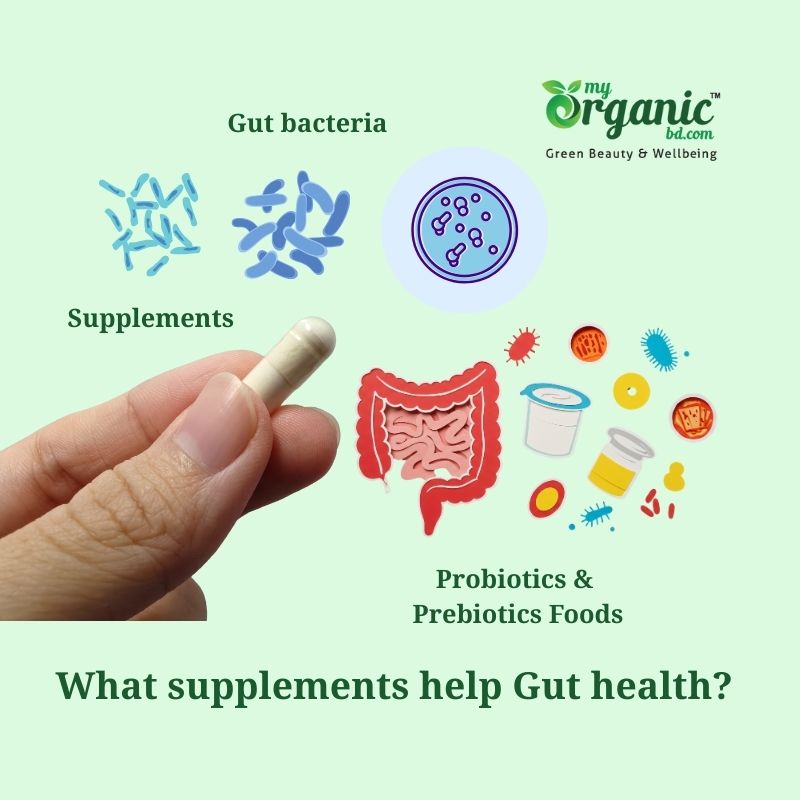
What supplements help Gut health most?
When it comes to gut health, probiotics, prebiotics, and fiber are your key options. Probiotics like Lactobacillus and Bifidobacterium improve the population of your gut bacteria. They offer different digestive and wellness benefits.
Probiotics are food for your gut bacteria. They do not add more bacteria, but nourish the existing ones.
Fibers are essential for better bowel movement and digestion. They also work as prebiotics. It is always best to get gut wellness benefits from fermented and other gut friendly food options.
But supplements can be important when you cannot pay attention to food or want extra benefits. Prebiotic, probiotic, Curcumin, fibers, digestive enzymes and L-Glutamine are the best supplements for gut health.
Avoiding fast food, sugar, and random antibiotics is also important for maintaining a flourishing gut.
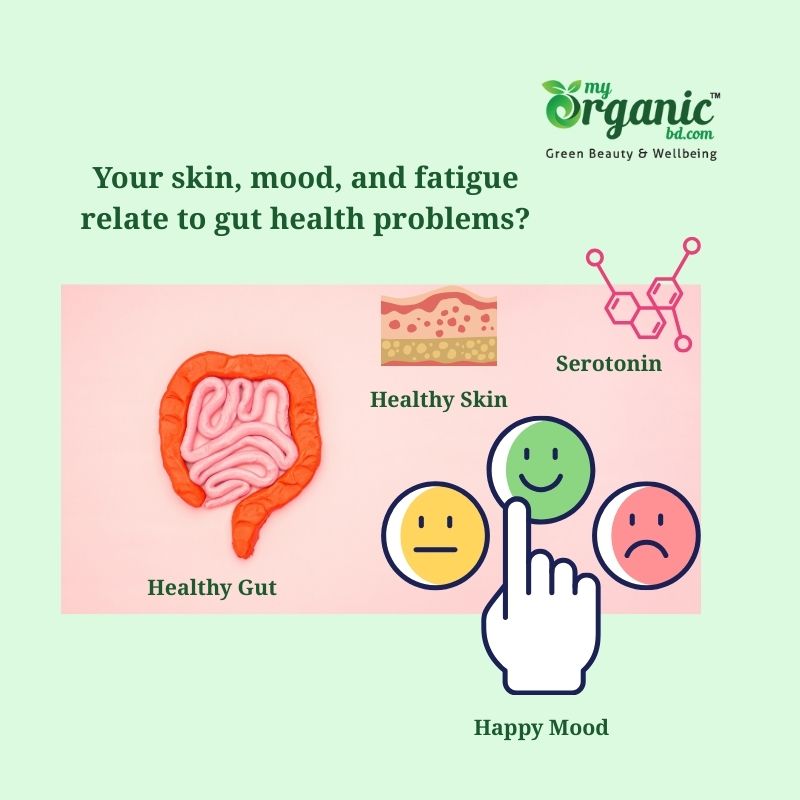
How can skin, mood, and fatigue relate to gut health problems?
Gut health is directly and indirectly linked to many health conditions, including skin, mood, and fatigue. Weakened gut lining causes immune responses, which cause stress in the gut. It also triggers an immune response in different parts of the skin.
Due to constant immune response in the gut, our immune system can be flawed, which can even cause skin-related disease and infection.
Our gut produces 90% of serotonin. It is a neurochemical that makes us feel happier. It’s not like dopamine, which gives you instant pleasure. It’s more like an overall good feeling in body and mind.
A balanced diet means a balanced production of serotonin, which results in a good mood. Oppositely, gut imbalance disturbs your mental condition.
An imbalanced gut also results in poor absorption of vital nutrients like B12, iron, and magnesium. Those nutrients are essential for energy production. So, an unhealthy gut can cause fatigue and lack of energy, and motivation.
How does stress management help heal the gut?
Our gut and brain are directly connected with nerves. Whenever you take stress, your brain sends a stress signal to your gut. This causes slow digestion, increased gut sensitivity, and worsens conditions like IBS.
Stress also releases chemicals like cortisol, which reduce the microbial diversity of your gut. Chronic Stress can also cause leaky gut. In this condition, food particles and toxins can enter your bloodstream, causing inflammation, allergy, and skin issues.
Our brain and mental health depend on gut health. Similarly, our gut health depends on mental wellness. Once you fall into a bad mental or gut condition, it becomes a never-ending loop. Only deliberate steps can help you get out of this.
For stress reduction, learn deep breathing, walk in nature, practice yoga, and exercise. Social connection and laughter also reduce stress.

Why is microbiome diversity related to gut wellness?
There is a whole ecosystem inside your gut. Every beneficial microbe has a different role to play.
- Some break down fibers.
- Some produce vitamins like B12 and K2.
- Some break down fatty acids.
- And others train your immune system.
And altogether, they protect your gut from harmful bacteria.
Good bacteria compete with bad ones for nutrients and space. As your gut is already filled with good bacteria, bad ones can not easily inhabit it. A diversity in microbial communities is always a good metric for better gut health.
Different microbes also mean you have more than one species for a certain role. So if your gut gets disturbed, you will always have a backup community until you recover. It is also essential for our immune system.
A large part of our immunity is trained by our own gut. When their population is diverse, your gut signals the brain to release more serotonin, which enhances mood and wellness.
Conclusion
Our gut is the mega factory of all the essentials our body needs. When the factory doesn’t work well, your body suffers. When it runs properly, every part of your body stays in good shape.
You get a stable release of the feel-good hormone. The normal microbiota of our gut is the workers of the factory. Taking care of those workers’ health and diversity is the key to a healthy gut and overall wellness.
Want to get a personalized gut health diet consultation? Schedule now. Please check out the best supplements for gut health.

Mr. Shariful Alam Pavel believes in natural living. To live a healthy conscious living, we need to eat green, live green. MyOrganic Bd is a green wellbeing brand, educating millions to live a better life with mother nature.

Dr. Goutom Banik, MBBS, MPH, is a public health researcher with extensive experience in maternal, newborn, and child health, including nutrition interventions in underserved communities. He has worked with leading organizations such as Save the Children and icddrb, contributing to national strategies on child health and nutrition. His expertise spans operational research, health systems strengthening, and community-based programs addressing childhood illness.

A Microbiologist, full time Content writer in MyOrganic Bd relentlessly trying people aware green lifestyle. Apart from working MyOrganic, he is an Environmental activitist.